
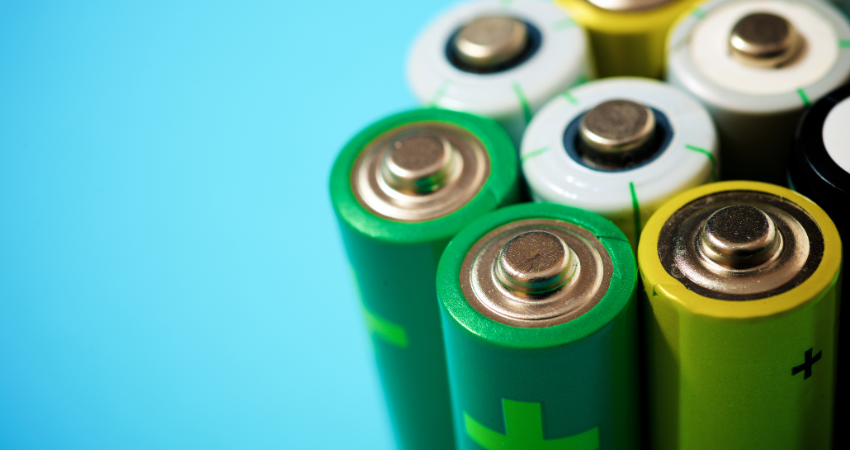
Pakistan has begun consultations to develop a national policy for local manufacturing of lithium-ion batteries, as the Ministry of Industries and Production moves to support the country’s expanding electric vehicle and energy storage market.
According to media reports, a high-level meeting on Wednesday, chaired by Special Assistant to the Prime Minister on Industries and Production Haroon Akhtar Khan, reviewed the framework for a Lithium-Ion Battery Policy and agreed to form three working groups to engage stakeholders from the public and private sectors. The groups have been tasked with submitting their recommendations within two weeks.
The meeting was attended by Minister of State for Finance and Railways Bilal Azhar Kayani, Secretary Industries Saif Anjum, Engineering Development Board Chief Executive Hamad Mansoor, and representatives from relevant ministries and industry.
SAPM Haroon Akhtar Khan said the government was working on a comprehensive policy to move beyond simple assembly of imported cells and components towards full-scale domestic production of lithium-ion batteries. He directed stakeholders to provide concrete proposals for incentives and regulatory support.
Officials from the Ministry of Commerce informed the meeting that raw materials used in lithium-ion batteries are currently imported at zero tax, while a 12% tax applies to fully assembled batteries. The Ministry of Science and Technology assured support for testing, certification, and quality assurance facilities for locally produced batteries.
Officials said the policy initiative aligns with the National Electric Vehicle Policy 2025–2030, under which Pakistan aims to shift 30% of its vehicle fleet to electric by 2030. To support this transition, the government has already announced incentives, including subsidies for electric two- and three-wheelers and electric cars.
The ministry noted that demand for lithium-ion batteries is projected to grow by around 26% over the next five years, driven by EV adoption and energy storage needs. Several Chinese electric vehicle manufacturers, including BYD, have entered the Pakistani market, with plans for local EV production, further increasing the need for a domestic battery supply chain.
Officials also highlighted that Pakistan has identified potential lithium resources in parts of Balochistan, Azad Jammu and Kashmir, Gilgit-Baltistan, Khyber Pakhtunkhwa, and the Cholistan Desert, prompting the government to explore opportunities for value addition through local manufacturing.
The meeting concluded with an agreement to fast-track stakeholder consultations, with the government reaffirming its intent to reduce import dependence and strengthen Pakistan’s industrial and energy storage ecosystem through localized lithium-ion battery production.
Discover more from Brackly News
Subscribe to get the latest posts sent to your email.