

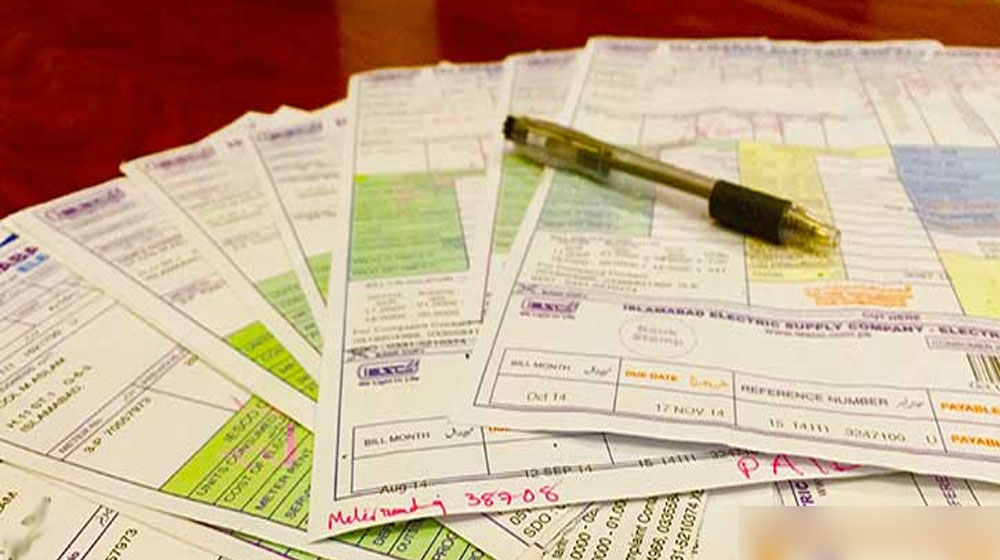
ISLAMABAD: Electricity consumers across Pakistan may see a marginal but welcome relief of Rs0.7182 per unit in their power bills, as the National Electric Power Regulatory Authority (NEPRA) is set to consider fuel charges adjustment (FCA) for November 2025 during a public hearing scheduled for December 31.
According to industry sources, the Central Power Purchasing Agency–Guarantee (CPPA-G) has sought a negative fuel cost adjustment of Rs0.7182 per unit after the actual average fuel cost of electricity for November came in at Rs6.1621 per kilowatt-hour, lower than the reference fuel cost of Rs6.8803 per unit built into consumer tariffs. If approved, the relief will be passed on uniformly to consumers of ex-WAPDA distribution companies (XWDISCOs), while K-Electric consumers will be treated separately under the applicable regulatory framework.
The proposed relief stems largely from a relatively favourable fuel mix during November, when cheaper sources such as hydel and nuclear power dominated electricity generation, helping offset the impact of expensive fuels like RLNG, gas and coal. For consumers already burdened by high electricity bills, even a sub-Re1 reduction per unit could provide some breathing space, particularly for households with higher monthly consumption.
During November 2025, total electricity generation from all sources stood at 8,050 gigawatt-hours (GWh). After adjusting 31 GWh for sales to independent power producers and accounting for transmission losses of 206 GWh, net electricity supplied to distribution companies was recorded at 7,813 GWh. The total fuel cost of this electricity was calculated at Rs48.144 billion, translating into an average delivered fuel cost of Rs6.1621 per unit, which forms the basis of the proposed FCA relief.
Hydel power remained the backbone of the national grid, contributing 3,153 GWh, or 39.16 percent of total generation. Since hydropower involves no fuel cost, its higher share played a decisive role in pulling down the overall average cost of electricity and easing pressure on consumer tariffs. Nuclear energy followed as the second-largest contributor, generating 2,031 GWh, or 25.23 percent of total output, at a comparatively low fuel cost of Rs2.2706 per unit, with total fuel expenses of Rs4.611 billion.
In contrast, electricity generated from gas and RLNG remained significantly more expensive. Gas-based power plants produced 680 GWh, accounting for 8.44 percent of the energy mix, at a fuel cost of Rs14.3396 per unit, resulting in fuel charges of Rs9.748 billion. RLNG-based generation stood at 696 GWh, or 8.64 percent, with a high fuel cost of Rs21.5789 per unit and total charges of Rs15.017 billion, continuing to exert upward pressure on electricity costs.
Coal-based generation also formed a notable part of the mix. Power plants running on local coal generated 752 GWh, or 9.34 percent of total electricity, at a fuel cost of Rs17.7669 per unit, incurring fuel expenses of Rs13.364 billion. Imported coal plants produced 407 GWh, or 5.06 percent, with a fuel cost of Rs14.1350 per unit and total fuel charges of Rs5.753 billion.
Electricity imports from Iran contributed 35 GWh, or 0.43 percent of total generation, at a relatively high cost of Rs22.5729 per unit, amounting to Rs782 million. Renewable energy sources, however, continued to provide cost relief. Wind power generated 136 GWh, or 1.68 percent, while solar energy contributed 86 GWh, or 1.07 percent. Bagasse-based plants supplied 75 GWh, accounting for 0.94 percent of total generation, at a fuel cost of Rs10.8411 per unit with total expenses of Rs817 million. No electricity was generated from high-speed diesel, furnace oil or mixed-fuel plants during the month.
The data also shows that transmission losses during November amounted to 206 GWh, or 2.56 percent of total generation, while a previous negative adjustment of Rs297 million was factored into the overall fuel cost calculation.
For consumers, the November fuel mix proved relatively favourable, as higher reliance on hydel, nuclear, wind and solar power helped keep the average fuel cost below the reference level. This allowed CPPA-G to seek a negative adjustment, translating into the proposed per-unit relief.
NEPRA will hold a public hearing on December 31, 2025, in Islamabad, with the option for online participation. Following the hearing, the authority will issue a determination, which—if approved—will be notified and reflected in electricity bills in the coming months, determining whether consumers ultimately receive the proposed Rs0.7182 per unit relief.
Discover more from Brackly News
Subscribe to get the latest posts sent to your email.